Knee Replacement in India: what to expect from first call to first walk
Assessment, surgery day, hospital stay and the physiotherapy plan that gets you moving again, explained clearly before you travel.

typical hospital stay
common stay in India after surgery
first steps with physio support
for gradual full recovery
Is knee replacement right for you?
Knee replacement replaces worn joint surfaces with a metal and medical-grade plastic implant. It is usually considered when arthritis or damage causes pain and stiffness that no longer respond to physiotherapy, medication or injections, and daily life such as walking, stairs or sleep is affected.
- Persistent knee pain that limits walking, stairs or rest
- Imaging such as an X-ray showing significant joint damage
- Treatments you have already tried without lasting relief
Only a surgeon can decide. This guide explains the journey. Whether surgery suits you depends on your examination, scans, general health and goals.
Types of knee replacement
Total knee replacement
Worn surfaces of the whole joint are replaced. Suited to widespread damage.
Partial knee replacement
Only the damaged compartment is replaced, which suits limited damage in a suitable candidate.
Bilateral replacement
Both knees, either together or in stages. Your surgeon advises based on fitness and recovery needs.
Some hospitals also offer robotic-assisted techniques. Availability and benefit vary, so ask your surgeon why a particular approach is recommended for you.
Your journey, step by step
- Share your reportsSend X-rays or MRI, your medical history and current medicines. NajmCare passes them to suitable orthopaedic surgeons for an opinion.
- Remote consultation and planYou speak with the surgeon, receive a recommended procedure and a written, itemised estimate, and agree dates.
- Travel and pre-operative checksAfter you arrive, expect an examination, blood tests, an ECG and an anaesthesia review before surgery is confirmed.
- Surgery dayThe anaesthetist and surgeon explain the plan. The operation commonly takes a couple of hours, followed by time in recovery.
- Hospital stay and first stepsPhysiotherapists usually get you standing and walking with support within a day or two. Most patients stay in hospital for several days.
- Recovery stay and clearance to flyYou remain in India for wound checks and rehabilitation. Your surgeon decides when it is safe to travel home.
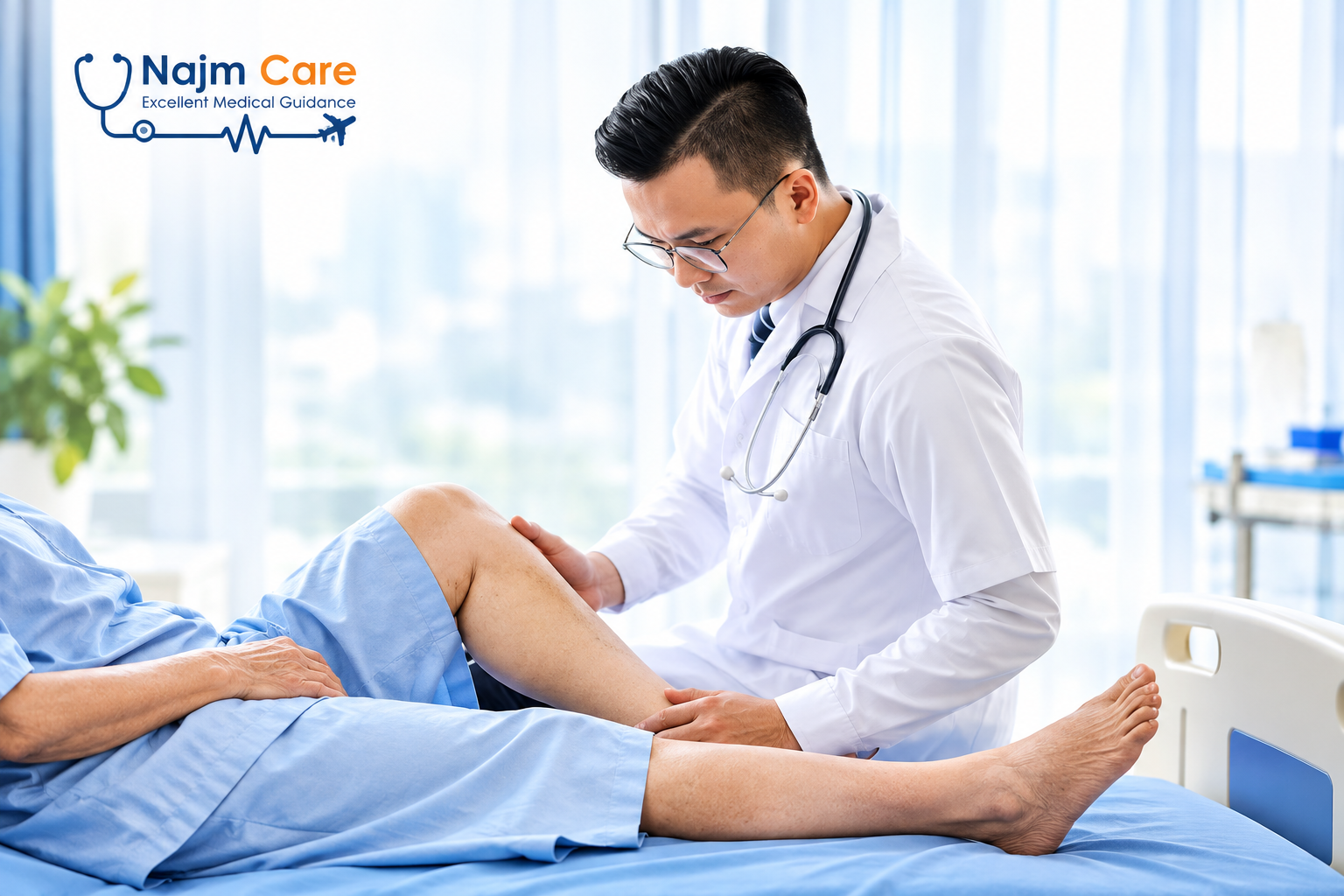
Recovery: typical milestones
Everyone heals differently. These ranges are typical, and your surgeon and physiotherapist will set your own targets.
| When | What to expect |
|---|---|
| Day 1 to 2 | Standing and first walking steps with a walker, pain control, simple knee exercises |
| First 2 weeks | Swelling and bruising, daily exercises, wound care, then wound check and stitch or staple removal as advised |
| Weeks 2 to 6 | Walking further, improving bend and straightening, reducing walking aids |
| 3 months | Most daily activities feel more comfortable as strength returns |
| Up to 12 months | Gradual gains as swelling settles and strength builds |
Rehabilitation matters as much as the operation. Keep up your exercises daily, and ask for a written plan your own physiotherapist can continue when you return home.
Questions to ask your surgeon
Tick these off as you ask them. Good teams welcome the questions.
Risks and cost, honestly
All surgery carries risk. For knee replacement these include infection, blood clots, stiffness, ongoing pain, anaesthesia-related problems and, over time, implant wear. Your surgeon will explain how likely each is for you and how they reduce them, including steps to protect against clots during recovery and long flights.
Cost depends on the hospital, implant, room category, length of stay and whether one or both knees are treated. Ask for an itemised written estimate and what happens if you need to stay longer than planned.
Frequently asked questions
How long should I plan to stay in India?
Many patients plan roughly two to three weeks after surgery for hospital care, wound checks and rehabilitation, but your surgeon sets the date based on your recovery.
Can I fly home soon after surgery?
Only when your surgeon clears you. Air travel after joint surgery needs clot precautions, so do not book a fixed return flight before your plan is agreed.
Will I need physiotherapy after I go home?
Yes. Rehabilitation continues for weeks to months. Ask the hospital for a written exercise plan to share with your local physiotherapist.
Do I need a medical visa?
Yes, most international patients travel on a medical visa, and a companion can apply for an attendant visa. See our Medical Visa guide for the full checklist.
How do I get started?
Send your latest reports to NajmCare. We will arrange surgeon opinions and a written estimate so you can compare before deciding.
Thinking about knee replacement in India?
Send your X-rays and reports. We will arrange surgeon opinions and an itemised estimate.
Keep reading
This guide is general information and not medical advice. Timelines vary between patients and hospitals. Always follow your own surgeon and care team.